
Men Are Caregivers Too
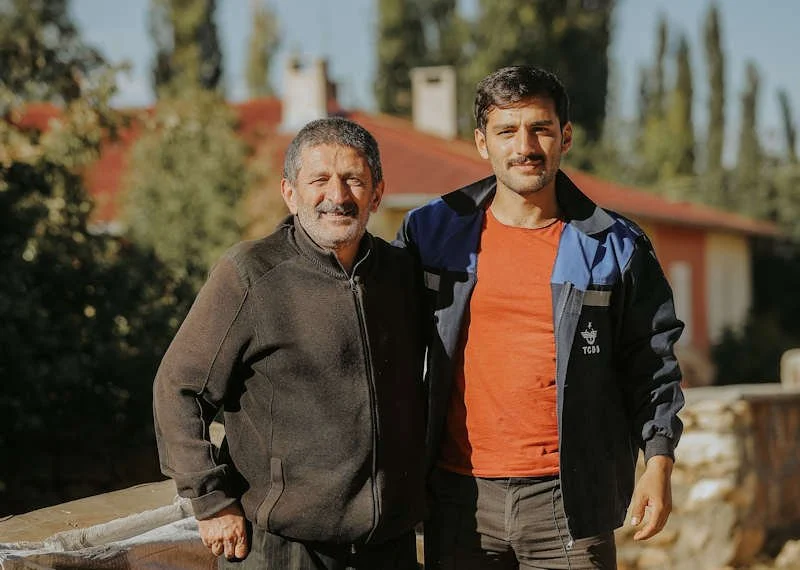
Recently, Saturday Night Live came out with a skit called “Sister.” It focused on a man who cared about his aging father but was relieved that he didn’t have to be the caregiver. All he had to do was call his sister, and she would swoop in and take care of all the “mess” so he could go back to living his best life.
It’s a funny piece that plays on traditional stereotypes: women being the caregivers and men being the aloof breadwinners
However, like all stereotypes, it paints with a broad brush and overlooks some of the realities of modern families.
Traditional roles are changing.
Women are often the primary breadwinner, and men are increasingly stepping into caregiving roles, whether for children or aging parents.
Sometimes the responsibility is shared with siblings or spouses. Often, it isn’t.
The determining factors often come down to availability, ability, the relationship, and financial circumstances.
Different Approaches, Same Responsibility
The SNL skit gives the opportunity to have a more honest conversation about how men and women approach caregiving. Not because one is better than the other, but because our upbringing, life experiences and societal expectations influence how we respond.
Historically:
women have been expected to assume much of the hands-on role and emotional responsibility of caregiving.
while men have been conditioned to protect, provide and solve problems as presented
As a Daily Money Manager, I sometimes see this reflected in how caregiving responsibilities are approached.
Some men, including myself, tend to view caregiving as a project:
identify the problems
make a plan
allocate resources
hire the appropriate professionals
put protections in place.
Their goal is to put systems in place that ensure their parents are safe.
There is nothing wrong with that approach. In fact, it is an essential need.
But caregiving is rarely just a project and I think my clients would object to being seen this way.
There is an emotional and relational component that doesn’t always fit neatly into a plan or checklist. An aging parent may be frightened, lonely, embarrassed by declining abilities, or struggling with the loss of their independence.
Some women may be more accustomed to recognizing these less tangible needs and assuming the emotional responsibilities of family caregiving. But I’ve seen men provide extraordinary emotional care and women approach caregiving with a highly organized, solution-oriented mindset.
The truth is that effective caregiving requires both approaches.
Someone needs to make sure:
the bills are paid
the house is safe
appropriate services are in place
Someone also needs to make sure the person receiving care feels heard, valued, respected, and loved.
The Invisible Work of Men Who Care
One thing I’ve noticed professionally is that men who take on caregiving responsibilities don’t always identify themselves as caregivers.
They may describe themselves as managing their mother’s finances, helping their father stay in his home, or simply “taking care of it”.
But that is caregiving.
It’s him who spends hours on the phone with insurance companies, financial institutions, attorneys, and medical providers.
It’s him who rearranges his work schedule to take his father to appointments.
It’s him who monitors a parent’s finances while making sure appropriate care is in place and schedules are set.
These men are often doing this while managing careers, marriages, children, and their own lives.
Some may be less comfortable asking for help or discussing the emotional toll, but that doesn’t mean they aren’t struggling. It may simply mean their struggles are less visible.
Caregiving Isn’t a Gender Assignment
Perhaps the biggest takeaway from the SNL skit is that we still expect women to step in when aging parents need help. That expectation does a disservice to everyone.
It places an unfair burden on female family members while overlooking the many men who are already providing extraordinary care.
Caregiving should not be automatically assigned based on gender.
What matters is that aging parents receive the care, dignity, and protection they deserve, and that the people providing that care don’t lose themselves in the process.
So, to the sons, brothers, husbands, nephews, and other men caring for aging parents: You are caregivers, too.
You may not always call yourselves that, and you may not fit the traditional image of what caregiving looks like. But the time you give, the decisions you make, the sacrifices you endure, and the love you demonstrate matter.
I think it’s time we recognized that.